Built at Portsmouth for Henry VIII, Mary Rose served for more than three decades before sinking in the Solent in 1545. Her recovered remains offer a rare view of the working lives, equipment and skills of a Tudor shipboard community.
Fate / preservation: Recovered remains preserved by the Mary Rose Museum.
Plan a visit
Portsmouth, England · Raised original hull and collection displayed in a museum.
Golden Hind was the only ship to complete the entire voyage of Francis Drake's 1577-1580 expedition. The journey combined exploration with attacks on Spanish shipping and the seizure of valuable cargo. Her story connects navigation and endurance with the violence and rivalry of overseas expansion.
Fate / preservation: The original vessel does not survive. Modern replicas interpret its design.
Plan a visit
London, England · Modern replica visitor attraction; not the original Golden Hind.
Sailing warship · Swedish royal warship, launched 1627
Vasa was intended to demonstrate Sweden's naval power, but capsized in Stockholm on her maiden voyage in 1628. The surviving ship reveals both the ambition of seventeenth-century shipbuilding and the consequences of unstable proportions. Her recovery led to a continuing programme of conservation.
Fate / preservation: Salvaged in 1961 and preserved at the Vasa Museum.
Plan a visit
Stockholm, Sweden · Preserved original ship displayed in a museum.
Dreadnought combined a uniform heavy-gun battery with steam-turbine propulsion, setting a new benchmark for battleship design. Her name became shorthand for a generation of capital ships. During the First World War she sank the submarine U-29 by ramming, but missed the Battle of Jutland while undergoing a refit.
Belfast's wartime service included Arctic operations and support for the Normandy landings. A magnetic mine put the ship out of action in 1939, requiring extensive repairs. Her later service extended into the Cold War, and the preserved cruiser gives visitors a view of life aboard a large twentieth-century warship.
Fate / preservation: Preserved as an Imperial War Museums ship in London.
Kidd escorted carrier forces, rescued aircrew and provided fire support during the Pacific war. A kamikaze attack off Okinawa in April 1945 caused severe damage and loss of life. Repairs allowed the ship to return to service, and she was later recommissioned for the Korean War.
Fate / preservation: Preserved as a museum destroyer; check the museum for current access during overhaul.
Plan a visit
Baton Rouge, Louisiana, USA · Preserved destroyer and museum; check current ship access.
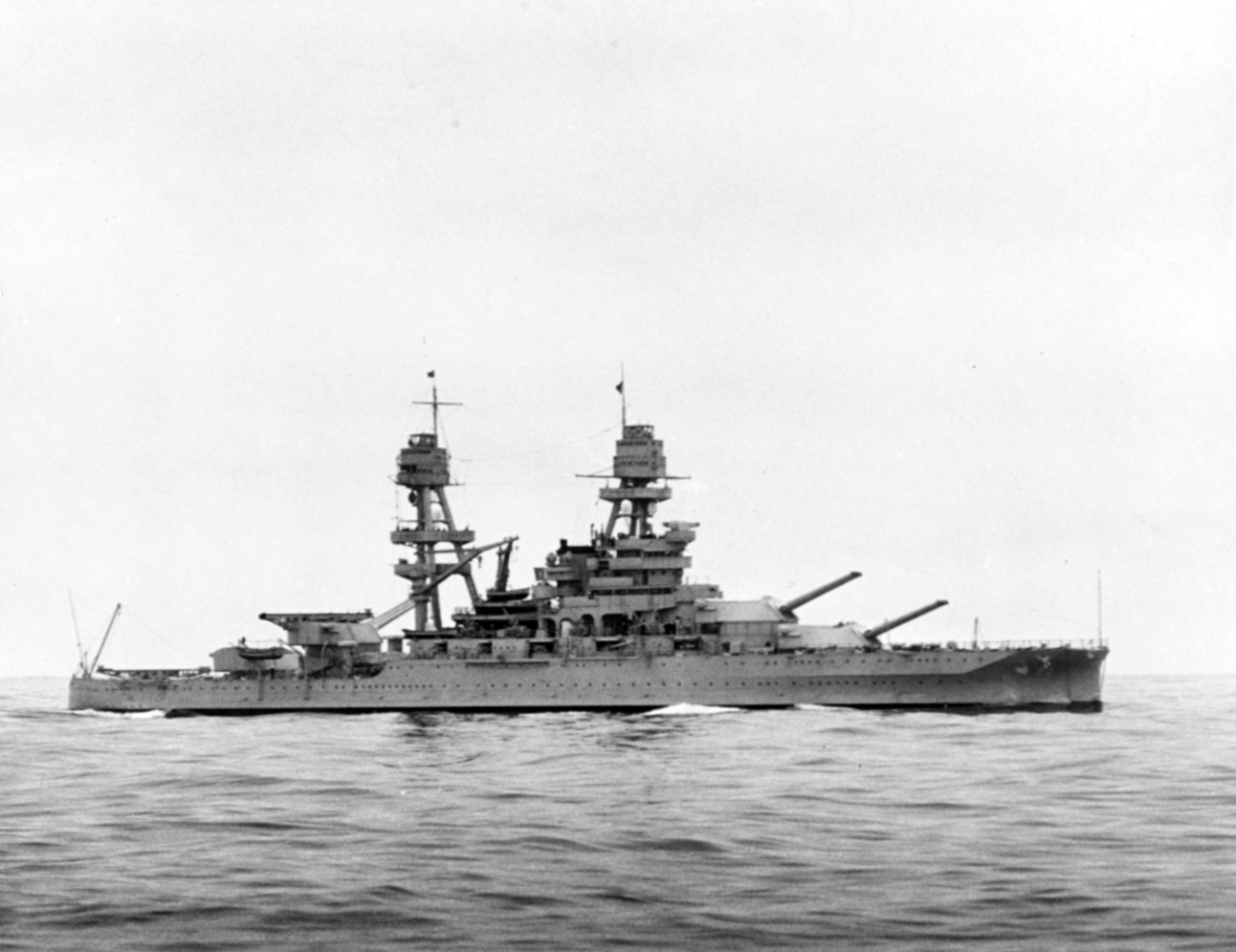
Arizona entered service in 1916 and later underwent a major modernization. This Pennsylvania-class battleship was lost during the attack on Pearl Harbor in 1941. Her wreck became the focus of a memorial commemorating the ship and those who died aboard her.
Fate / preservation: Wreck at Pearl Harbor, commemorated by the USS Arizona Memorial.
Milestones and sources
October 1916 — Commissioned into the United States Navy.
1929–1931 — Underwent major modernization.
7 December 1941 — Lost during the attack on Pearl Harbor.
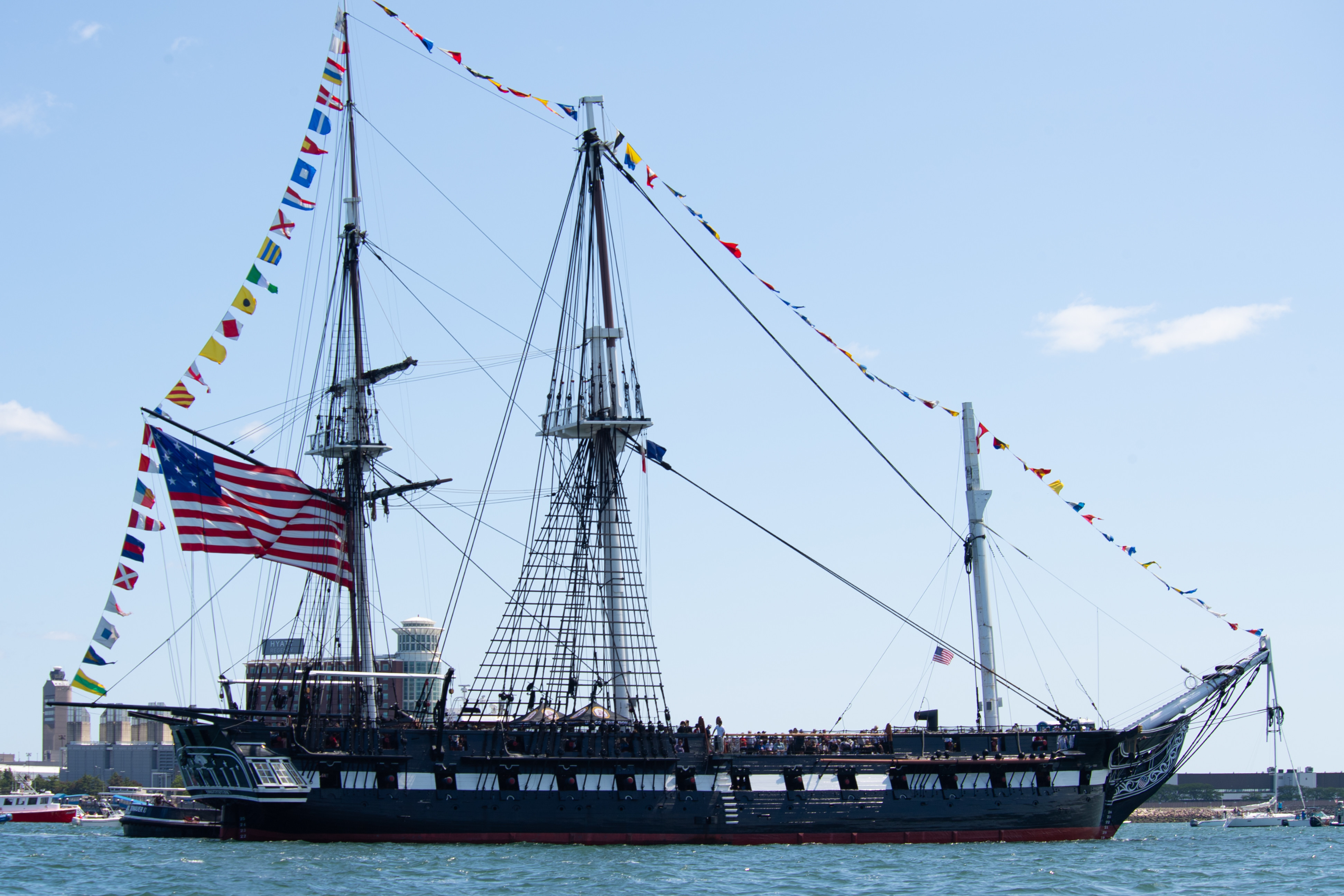
Launched at Boston in 1797, Constitution was one of the six frigates authorized for the early United States Navy. Her fighting service included the War of 1812. Preserved in Boston, the ship connects that sailing-navy history with present-day conservation and public visits.
Fate / preservation: Preserved in Boston; remains a commissioned U.S. Navy ship.
Plan a visit
Boston, Massachusetts, USA · Preserved commissioned ship; check Navy visitor and identification requirements.
Original WakeAtlas summary. Sources reviewed 8 September 2026. Dates retain the precision of the source.
Image unavailable. The source link and credit remain below.
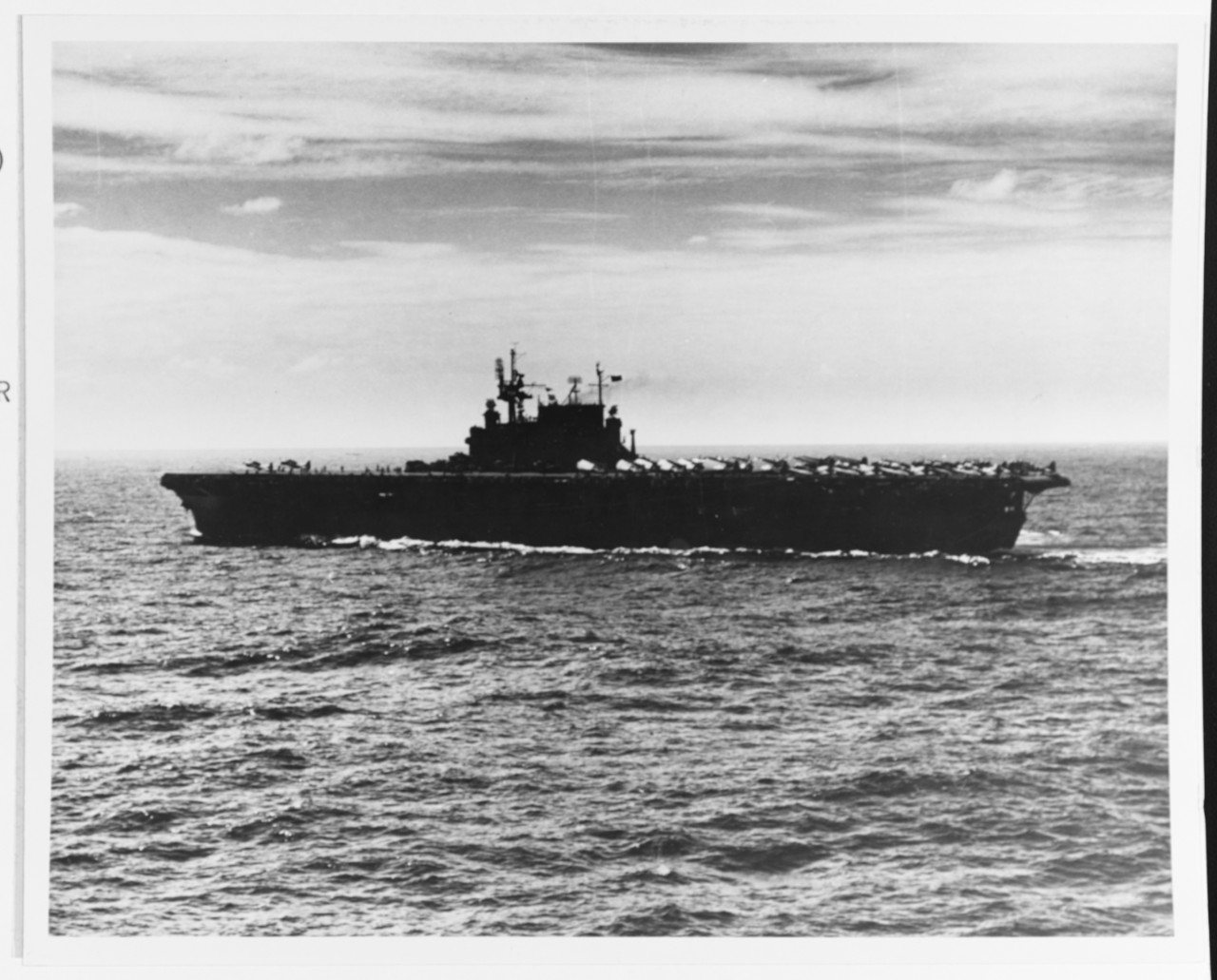
Period photograph · USS Enterprise on 24 November 1943 during operations supporting the Gilbert Islands campaign, photographed from USS Monterey.Image credit and licence
U.S. Navy / National Archives, 80-G-366884 · 24 November 1943
Aircraft carrier · Yorktown-class aircraft carrier commissioned in 1938
Enterprise served in the Pacific during the Second World War and later operated aircraft on night missions. After the fighting, she carried returning service personnel home. Efforts to preserve the carrier were unsuccessful, and she was eventually dismantled.
Fate / preservation: Sold for scrap in 1958; dismantling completed in 1960.
Milestones and sources
3 October 1936 — Launched at Newport News, Virginia.
12 May 1938 — Commissioned at Norfolk.
1945 — Operated as a night carrier and later transported returning veterans.
17 February 1947 — Decommissioned at Bayonne, New Jersey.
1 July 1958 — Sold for scrap after preservation efforts failed.
Original WakeAtlas summary. Sources reviewed 8 September 2026. Dates retain the precision of the source.
Image unavailable. The source link and credit remain below.
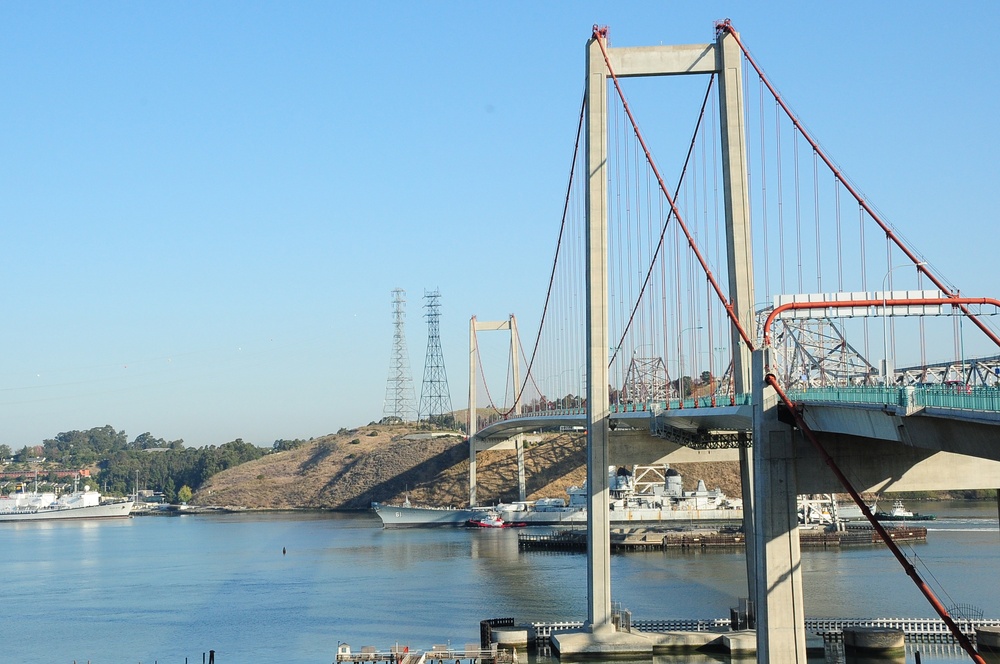
Modern restoration photograph · Iowa under tow beneath the Carquinez Bridge on 28 October 2011, before restoration as a museum. The appearance of U.S. Department of War (DoW) visual information does not imply or constitute DoW endorsement.Image credit and licence
Petty Officer 2nd Class Levi Read / U.S. Coast Guard · 28 October 2011
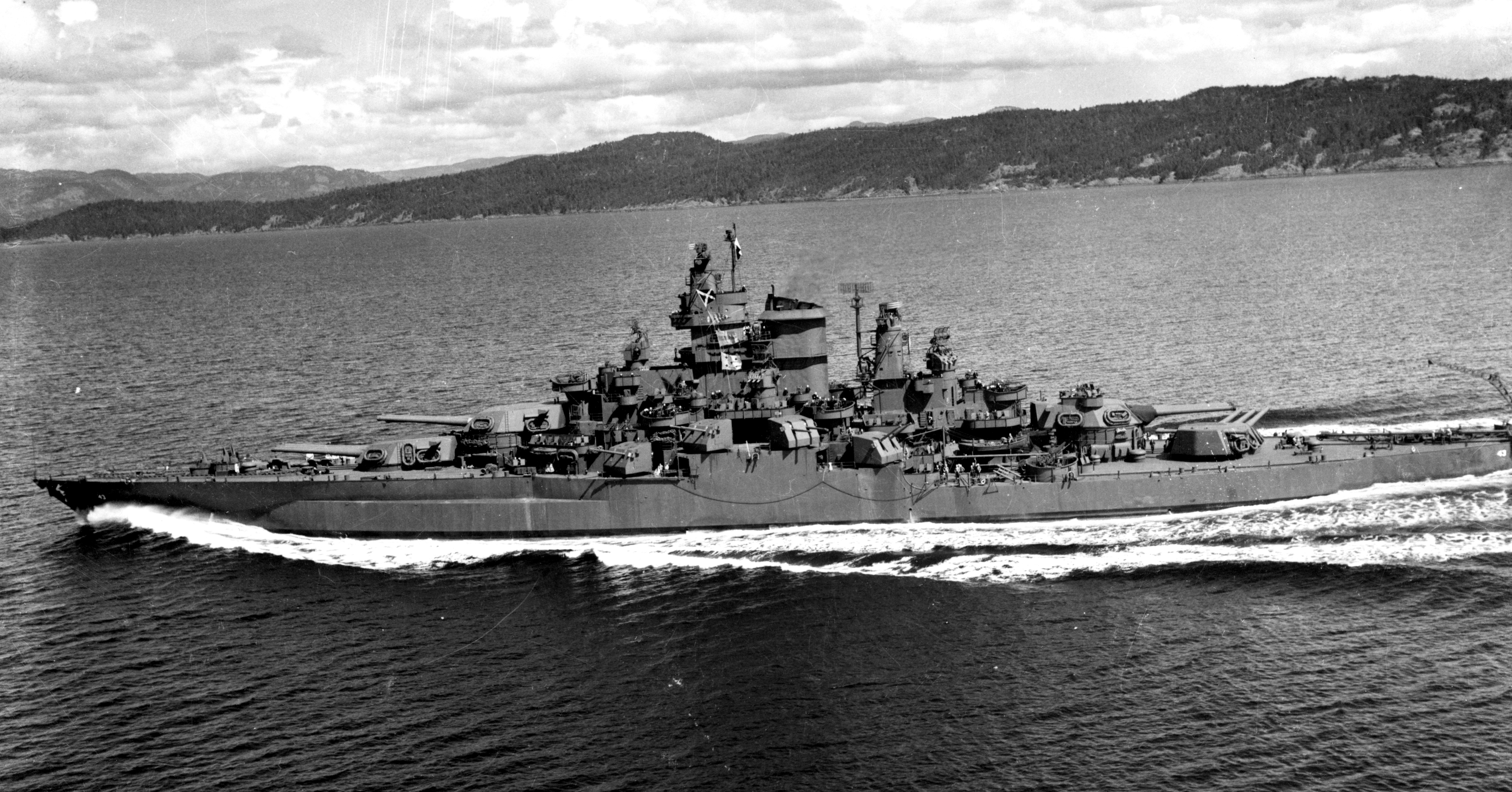
Battleship · Lead ship of the Iowa class, commissioned in 1943
Iowa entered service in 1943 as the lead ship of a new American battleship class. Her long career ended with her final decommissioning in 1990. The surviving ship later underwent restoration for public exhibition in Los Angeles.
Fate / preservation: Preserved as a museum ship in Los Angeles.
Plan a visit
San Pedro, Los Angeles, USA · Preserved battleship museum.
Original WakeAtlas summary. Sources reviewed 8 September 2026. Dates retain the precision of the source.
Image unavailable. The source link and credit remain below.
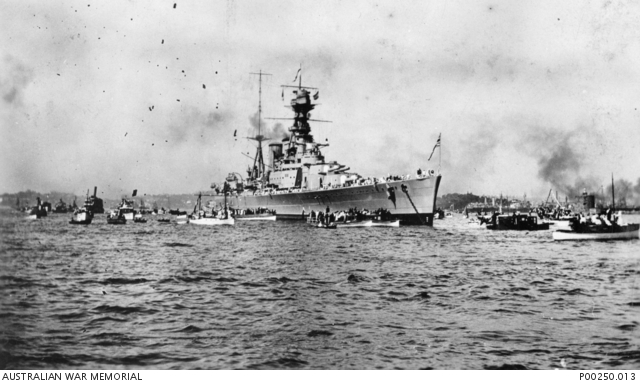
Period photograph · Hood at anchor in Sydney Harbour during the Special Service Squadron visit. The archive credit strip is retained.Image credit and licence
Photographer unidentified / Australian War Memorial, P00250.013 · 9 April 1924
Battlecruiser · Royal Navy battlecruiser commissioned in 1920
Hood represented British naval power on overseas visits between the world wars. Her size, speed and eight 15-inch guns made her a prominent fleet flagship, although a planned modernisation was postponed when war began. In May 1941 she sailed with Prince of Wales to intercept Bismarck and Prinz Eugen in the Denmark Strait. A catastrophic explosion destroyed Hood during the engagement; only three men survived. The 1924 photograph records a very different moment in her career, arriving in Sydney amid harbour traffic.
Fate / preservation: Sunk in the Battle of the Denmark Strait on 24 May 1941.
Milestones and sources
1920 — Commissioned into the Royal Navy.
9 April 1924 — Photographed at anchor in Sydney during the Special Service Squadron visit.
24 May 1941 — Lost while engaging Bismarck and Prinz Eugen alongside Prince of Wales.
Battleship · Second World War battleship; distinct from the present-day aircraft carrier
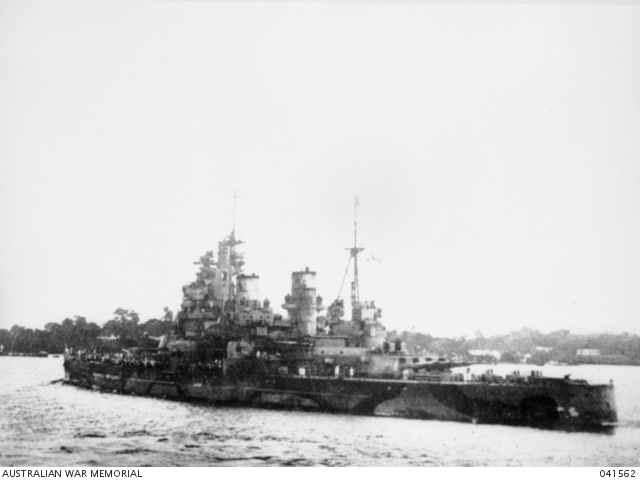
Prince of Wales fought Bismarck alongside Hood in May 1941, sustaining damage but surviving the Denmark Strait engagement. After repairs she carried Winston Churchill to Newfoundland for his meeting with Franklin Roosevelt, which produced the Atlantic Charter. Later that year she joined Force Z in the Far East with the battlecruiser Repulse. Both ships were sunk by Japanese aircraft off Malaya on 10 December. Her brief wartime career connected the Atlantic naval campaign, Allied diplomacy and the opening of the war in Southeast Asia.
Fate / preservation: Sunk by Japanese aircraft off Malaya on 10 December 1941.
Milestones and sources
24 May 1941 — Fought at the Battle of the Denmark Strait alongside Hood.
August 1941 — Carried Churchill to the Newfoundland conference that produced the Atlantic Charter.
8 December 1941 — Departed Singapore Harbour, as recorded in the archive photograph.
10 December 1941 — Sunk by air attack off Malaya, together with Repulse.
Original WakeAtlas summary. Sources reviewed 8 September 2026. Dates retain the precision of the source.
Image unavailable. The source link and credit remain below.
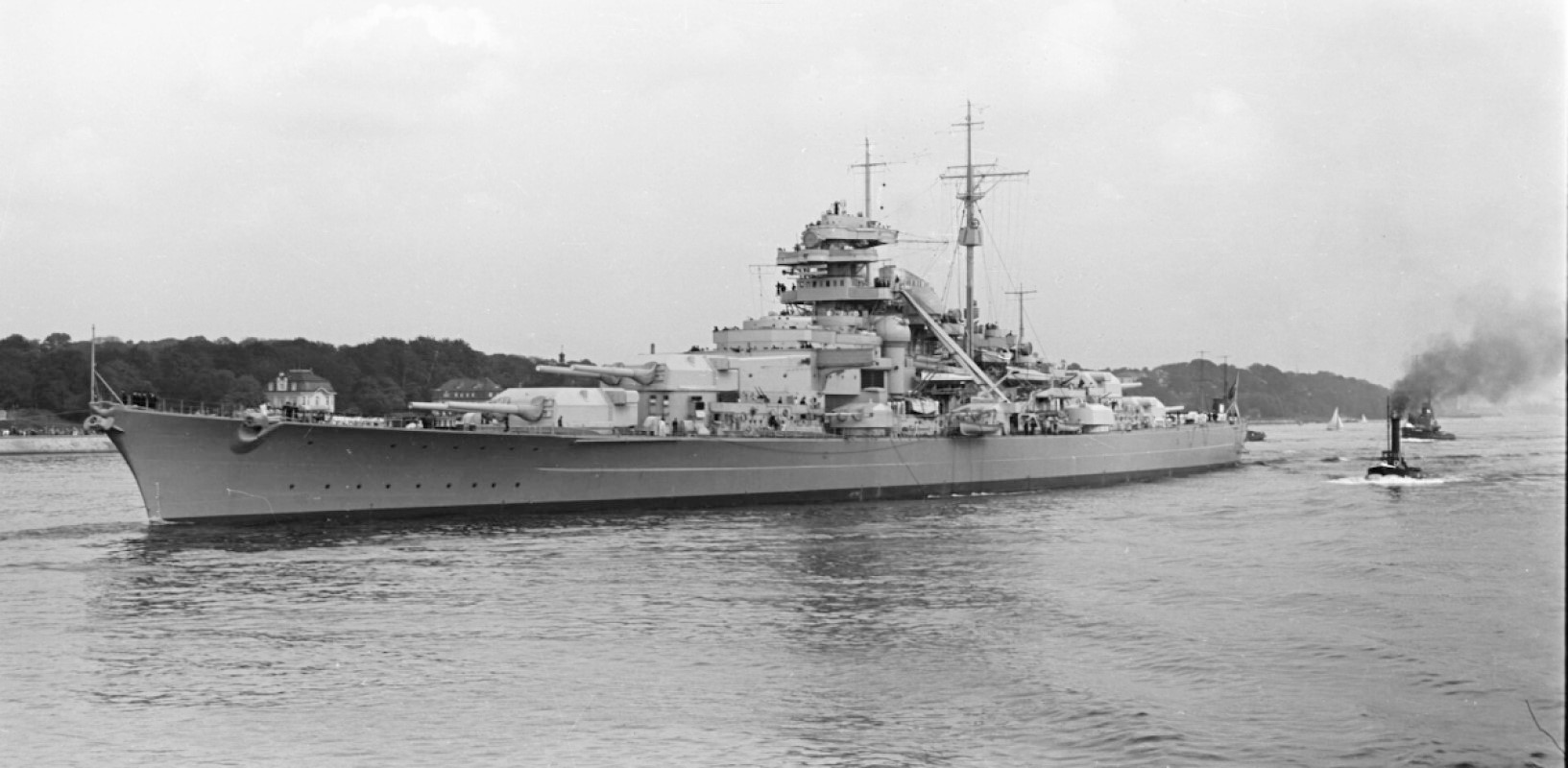
Period photograph · Bismarck off Blankenese in 1940. This Commons version was brightened and cleaned by Hohum in 2021; WakeAtlas retains that version without further content changes.Image credit and licence
Battleship · German battleship photographed in 1940
Bismarck sailed into the Atlantic with the heavy cruiser Prinz Eugen in May 1941. At the Denmark Strait the German ships encountered Hood and Prince of Wales; Hood was destroyed, while damage sustained by Bismarck helped force the abandonment of her commerce-raiding mission. British forces pursued the battleship toward occupied France. A torpedo attack from Ark Royal damaged her steering on 26 May, allowing pursuing warships to close. Bismarck sank after the final engagement the following morning. The archive photograph shows her before that short operational campaign.
Fate / preservation: Sunk in the North Atlantic on 27 May 1941 after battle with British forces.
Milestones and sources
1940 — Photographed off Blankenese with tugs nearby.
24 May 1941 — Engaged Hood and Prince of Wales in the Denmark Strait alongside Prinz Eugen.
26 May 1941 — Steering disabled during a Swordfish torpedo attack launched from Ark Royal.
27 May 1941 — Sank following the final action against pursuing British warships.
Original WakeAtlas summary. Sources reviewed 8 September 2026. Dates retain the precision of the source.
Image unavailable. The source link and credit remain below.
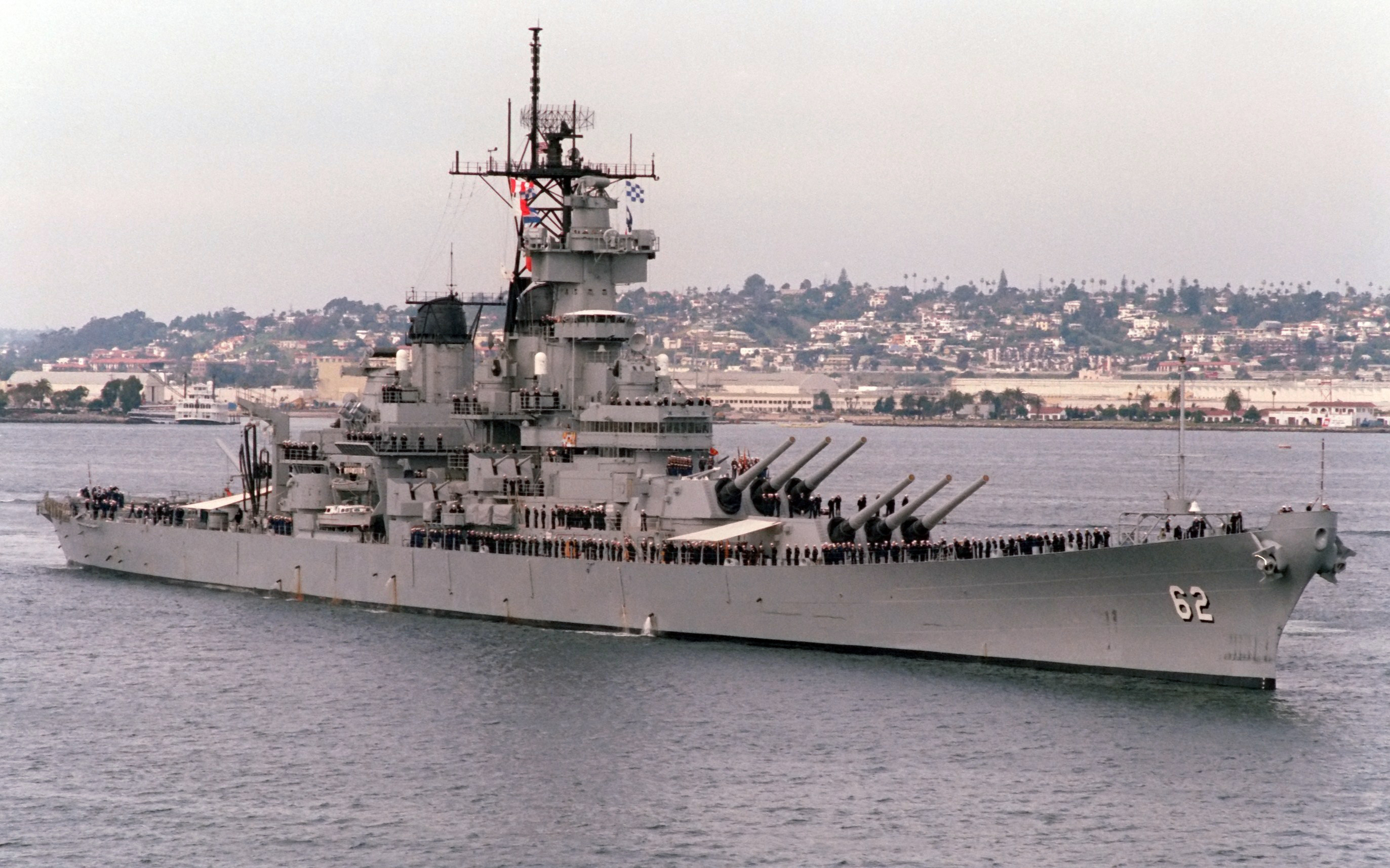
Historic service photograph · USS New Jersey with sailors lining her rails, 8 January 1985. This shows her later service configuration, before becoming a museum.Image credit and licence
Battleship · Iowa-class battleship; sister ship of USS Iowa
Built in Philadelphia, New Jersey served as a fast battleship and fleet flagship in the Pacific during the Second World War. Her career extended through repeated periods of reserve and reactivation, including service in Korea, Vietnam and the 1980s. Modernisation added missile systems alongside her large naval guns. After her final decommissioning in 1991, she returned to the Delaware River and opened as a museum in Camden in 2001.
Fate / preservation: Preserved as the Battleship New Jersey Museum and Memorial in Camden, New Jersey.
Plan a visit
Camden, New Jersey, USA · Preserved battleship museum.
Original WakeAtlas summary. Sources reviewed 8 September 2026. Dates retain the precision of the source.
Image unavailable. The source link and credit remain below.
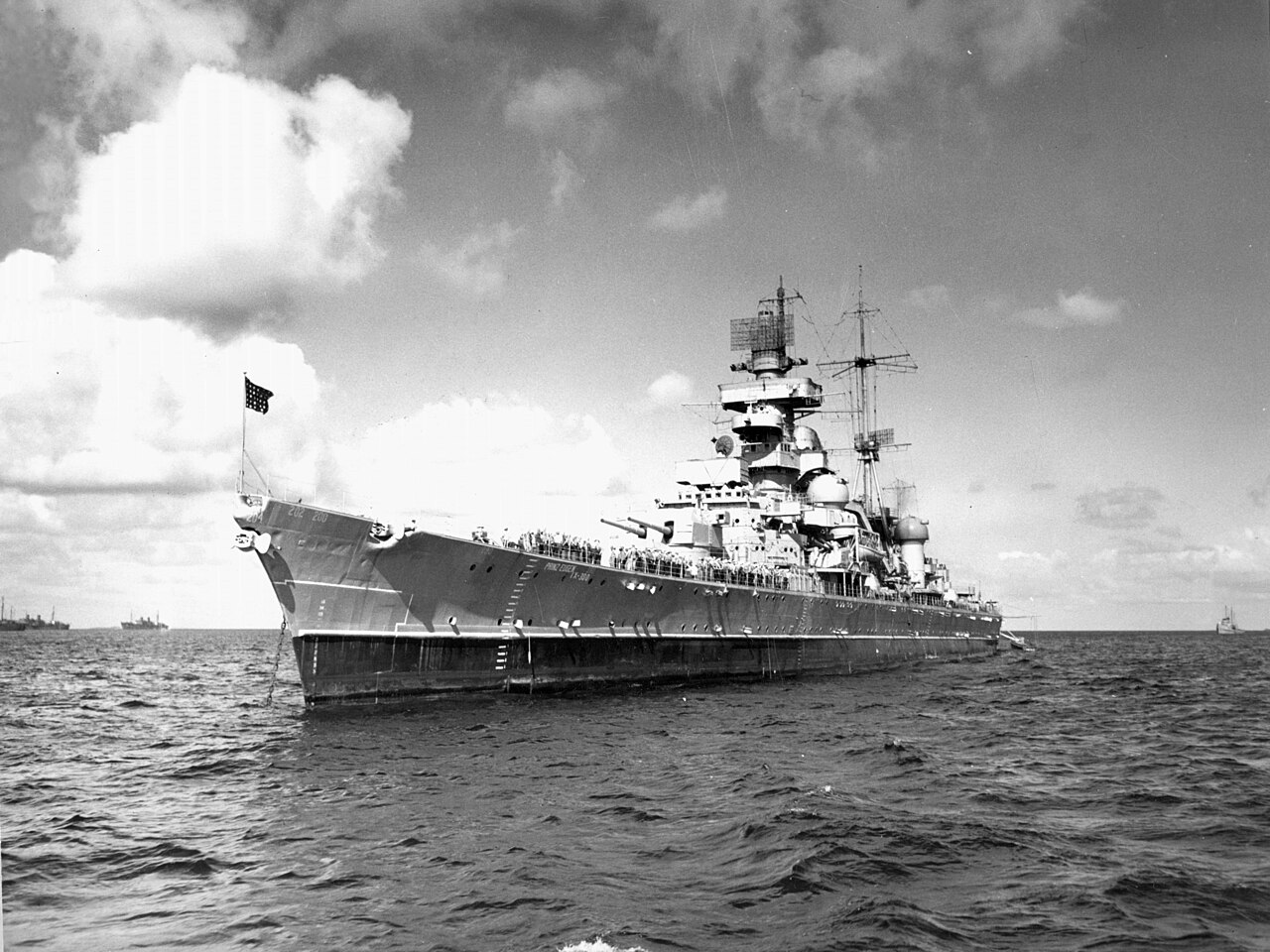
Post-war photograph · Prinz Eugen prepared for Operation Crossroads at Bikini on 14 June 1946, after transfer to the United States. This is her post-war target-ship configuration.Image credit and licence
U.S. Navy Naval Photographic Center / National Archives, 80-G-627444 · 14 June 1946
Heavy cruiser · German heavy cruiser; later transferred to the United States as IX-300
Prinz Eugen accompanied Bismarck into the North Atlantic in May 1941 and fought at the Denmark Strait before separating to continue the raiding operation. She later returned to Brest and escaped through the English Channel with Scharnhorst and Gneisenau in February 1942. Subsequent service included training and Baltic operations. After surrender in 1945 she was transferred to the United States and used in the Operation Crossroads nuclear tests. She survived the tests but later capsized at Kwajalein. The photograph records her post-war target-ship configuration, rather than her appearance alongside Bismarck.
Fate / preservation: Capsized and sank near Enubuj, Kwajalein Atoll, on 22 December 1946.
Milestones and sources
20 August 1938 — Launched at Kiel.
1 August 1940 — Commissioned into the German Navy.
24 May 1941 — Fought alongside Bismarck at the Denmark Strait.
February 1942 — Returned from Brest to Germany through the English Channel.
7 May 1945 — Surrendered to British forces at Copenhagen.
14 June 1946 — Photographed prepared for Operation Crossroads target duty.
22 December 1946 — Capsized and sank at Kwajalein.
Original WakeAtlas summary. Sources reviewed 8 September 2026. Dates retain the precision of the source.
Image unavailable. The source link and credit remain below.
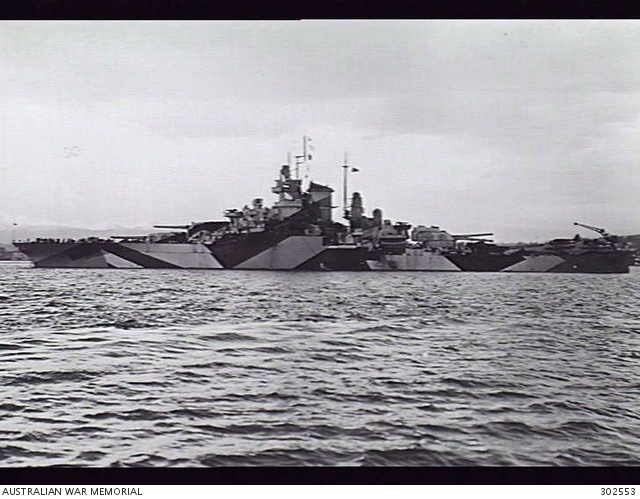
Period photograph · California after reconstruction following Pearl Harbor, with a tower superstructure and wartime camouflage. The archive does not give an exact photograph date; its credit strip is retained.Image credit and licence
Photographer unidentified / Australian War Memorial, Naval Historical Collection, 302553 · Second World War; exact date unspecified
Battleship · Tennessee-class battleship commissioned in 1921
California spent the interwar years as a Pacific fleet flagship before being sunk at her berth during the attack on Pearl Harbor. Salvage and extensive reconstruction gave the battleship a second wartime career. Her rebuilt silhouette replaced the earlier cage masts with a tower superstructure and strengthened her anti-aircraft armament. She returned to Pacific operations and fought at Surigao Strait during the Leyte campaign in October 1944. After the war she entered reserve and was eventually sold for scrapping. The archive photograph records the reconstructed ship, rather than her Pearl Harbor appearance.
Fate / preservation: Sold for scrapping in July 1959 after reserve service.
Milestones and sources
20 November 1919 — Launched at Mare Island Navy Yard.
August 1921 — Commissioned into the U.S. Navy.
7 December 1941 — Sunk during the Pearl Harbor attack; subsequently salvaged and rebuilt.
25 October 1944 — Took part in the Battle of Surigao Strait.
Original WakeAtlas summary. Sources reviewed 8 September 2026. Dates retain the precision of the source.
Image unavailable. The source link and credit remain below.
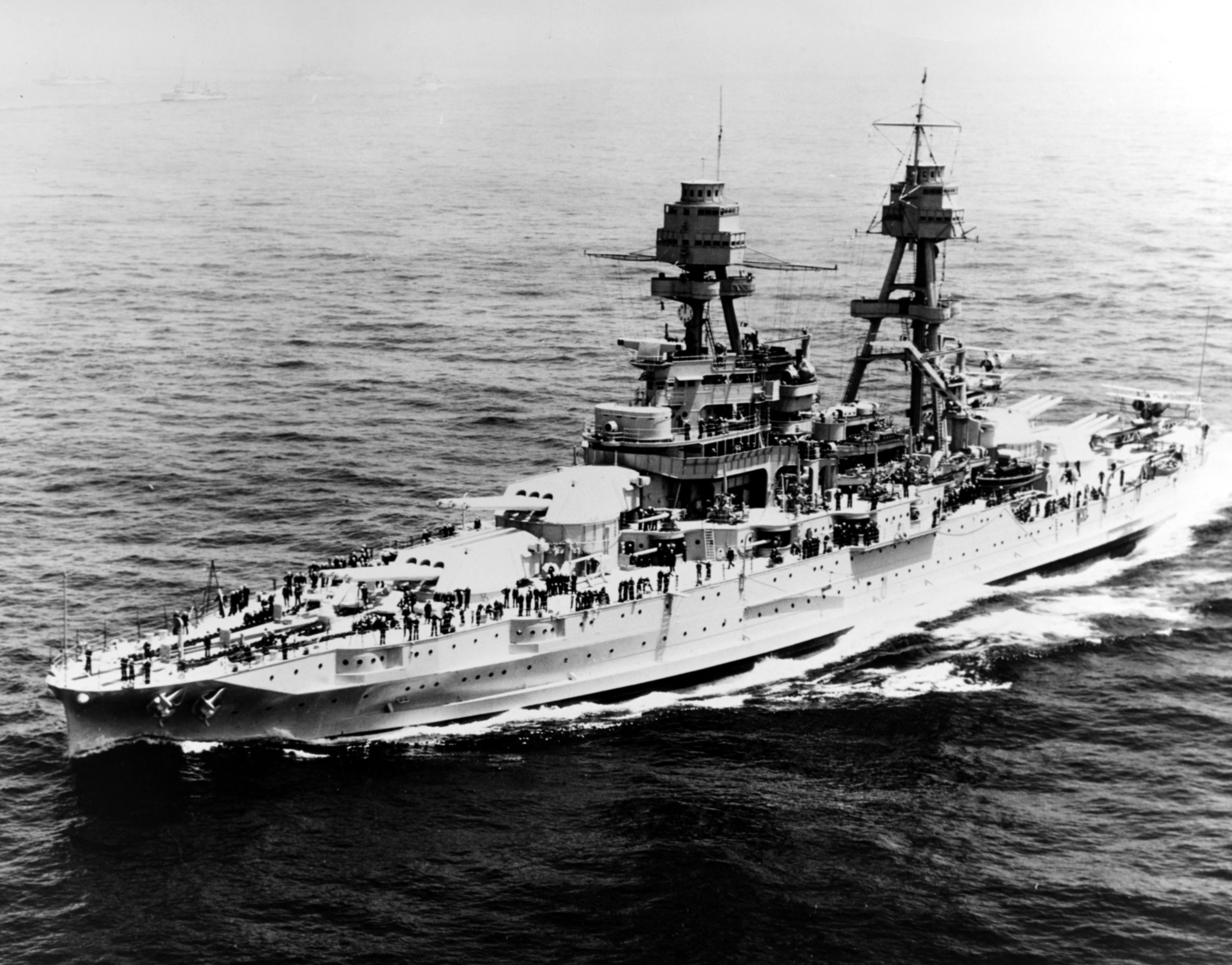
Interwar photograph · Pennsylvania underway off New York during the naval review on 31 May 1934. This shows her interwar configuration, before her Second World War service.Image credit and licence
U.S. Navy / Naval History and Heritage Command, NH 67583 · 31 May 1934
Battleship · Lead Pennsylvania-class battleship commissioned in 1916
Built at Newport News, Pennsylvania entered service in 1916 as the first of her class. The photograph shows her interwar appearance at a naval review off New York, serving as fleet flagship. Her later Pacific war service extended from the Aleutians to Okinawa. After the war, the battleship became a target for the 1946 atomic tests. She was decommissioned that August and remained at Kwajalein for further examinations before being sunk at sea in 1948. Two of her former gun barrels survive at the Pennsylvania Military Museum, linking the preserved objects to a ship whose hull no longer exists.
Fate / preservation: Sunk at sea in February 1948 after atomic-test and examination service.
Milestones and sources
16 March 1915 — Launched at Newport News.
12 June 1916 — Commissioned into the U.S. Navy.
31 May 1934 — Photographed at the naval review off New York as fleet flagship.
July 1946 — Used in two atomic-bomb tests.
29 August 1946 — Decommissioned; retained at Kwajalein for examinations.
Original WakeAtlas summary. Sources reviewed 8 September 2026. Dates retain the precision of the source.
Image unavailable. The source link and credit remain below.
Wartime photograph · Tennessee underway in Puget Sound on 12 May 1943 after modernization. Her rebuilt superstructure distinguishes this appearance from her Pearl Harbor configuration.Image credit and licence
U.S. Navy / Bureau of Ships Collection, National Archives, 19-N-45068 · 12 May 1943
Battleship · Lead Tennessee-class battleship commissioned in 1920
Tennessee entered service from New York Navy Yard in 1920. At Pearl Harbor she lay inboard of West Virginia and suffered two bomb hits. Repairs were followed by extensive reconstruction, transforming her silhouette before she returned to operations in 1943. Her heavy guns supported Pacific landings, including Tarawa and the Mariana Islands campaign. In October 1944 she joined the American battle line at Surigao Strait. The photograph captures the rebuilt ship in Puget Sound, rather than her earlier Pearl Harbor appearance. After wartime service she spent her remaining years in reserve and was sold for scrapping in 1959.
Fate / preservation: Sold for scrapping in July 1959 after reserve service.
Milestones and sources
30 April 1919 — Launched at New York Navy Yard.
3 June 1920 — Commissioned into the U.S. Navy.
7 December 1941 — Damaged by two bombs at Pearl Harbor.
12 May 1943 — Photographed underway in Puget Sound after modernization.
24-25 October 1944 — Participated in the Battle of Surigao Strait.
Original WakeAtlas summary. Sources reviewed 8 September 2026. Dates retain the precision of the source.
Image unavailable. The source link and credit remain below.
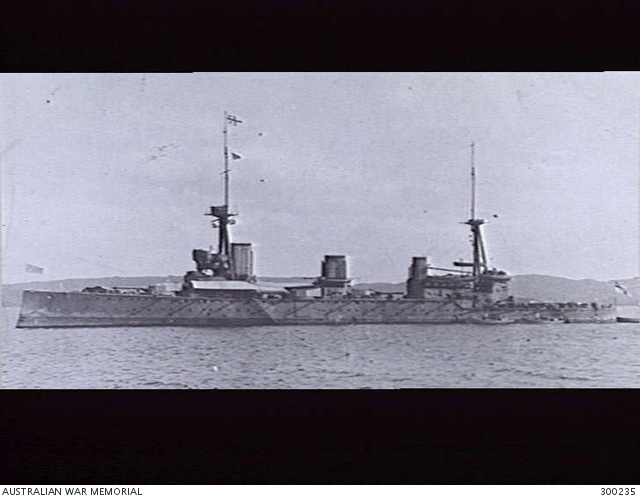
Period photograph · Australia in about 1913, before First World War modifications. The archive border and identification strip are retained.Image credit and licence
Photographer unidentified / Australian War Memorial, Naval Historical Collection, 300235 · Circa 1913
Battlecruiser · Indefatigable-class battlecruiser commissioned in 1913; not the later heavy cruiser
Australia became the Royal Australian Navy's first flagship and led its new fleet into Sydney Harbour in 1913. Early wartime operations took her through the Pacific before she joined the British battlecruiser force in 1915. North Sea patrols followed, but collision damage kept her out of the Battle of Jutland. In 1918 she also served as a platform for aircraft-launching experiments. After returning home, declining naval budgets curtailed her service. The Washington Naval Treaty brought a final end: useful equipment was removed before the battlecruiser was scuttled off Sydney in 1924.
Fate / preservation: Scuttled off Sydney on 12 April 1924 to meet Washington Naval Treaty requirements.
Milestones and sources
25 October 1911 — Launched at Clydebank, Scotland.
21 June 1913 — Commissioned at Portsmouth.
4 October 1913 — Led the Australian fleet into Sydney Harbour.
February 1915 — Became flagship of the 2nd Battle Cruiser Squadron.
22 April 1916 — Collision with New Zealand caused damage that kept her out of Jutland.
Original WakeAtlas summary. Sources reviewed 8 September 2026. Dates retain the precision of the source.
Image unavailable. The source link and credit remain below.
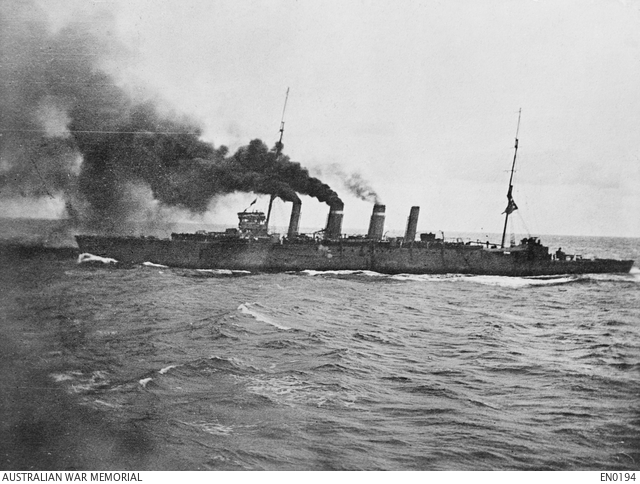
Wartime photograph · Sydney steaming towards Rabaul in September 1914. This is the first Sydney, not the Second World War cruiser. Archive credit strip retained.Image credit and licence
Photographer unknown / Australian War Memorial, EN0194 · September 1914
Sydney joined the Royal Australian Navy's initial fleet in 1913. During the following year she operated around New Guinea and escorted the first Anzac convoy. Diverted to investigate a warning from the Cocos Islands, she defeated the German cruiser Emden on 9 November 1914, leaving the raider grounded on North Keeling Island. Later duties took Sydney to the Americas and the North Sea. Her wartime career also included an encounter with a Zeppelin and experiments with a rotating aircraft-launching platform. After peacetime service around Australia and the Pacific, she was withdrawn in 1928 and sent for breaking up in 1929.
Fate / preservation: Delivered to Cockatoo Island for breaking up on 10 January 1929; several artefacts preserved.
Milestones and sources
29 August 1912 — Launched in Scotland.
26 June 1913 — Commissioned at Portsmouth.
9 November 1914 — Defeated Emden near the Cocos Islands.
4 May 1917 — Exchanged fire with Zeppelin L43; neither was damaged.
Original WakeAtlas summary. Sources reviewed 8 September 2026. Dates retain the precision of the source.
Image unavailable. The source link and credit remain below.
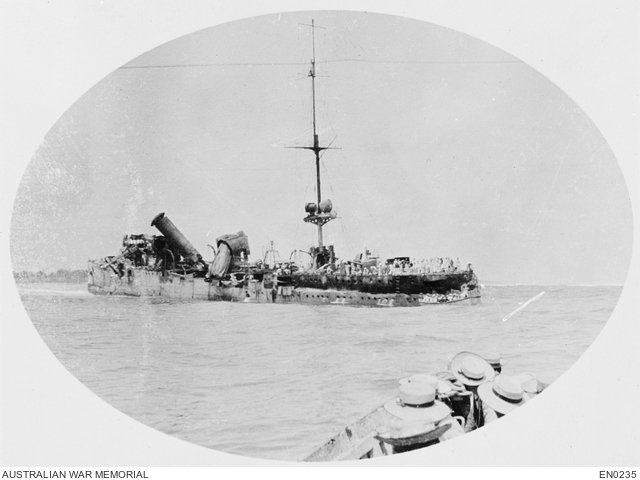
Wreck photograph · Emden after her battle with Sydney near the Cocos Islands; the archive dates this photograph to 9 November 1914. This shows the wreck, not her intact service appearance. Archive framing and credit retained.Image credit and licence
Photographer unknown / Australian War Memorial, EN0235 · 9 November 1914 (archive date)
Light cruiser · German cruiser launched in 1908 and commissioned in 1909; not the later ships of the same name
Emden served with Germany's East Asiatic Squadron before beginning an independent campaign against shipping in the Indian Ocean in 1914. Her raids drew Allied warships into an extended hunt. On 9 November she arrived at the Cocos Islands to attack the communications station, where a warning brought HMAS Sydney from a nearby troop convoy. The ensuing battle left Emden badly damaged and grounded on North Keeling Island. Survivors were taken aboard Sydney for treatment. Objects recovered from the wreck, including the damaged ship's bell, preserve a tangible connection to this short but widely remembered wartime career.
Fate / preservation: Wrecked on North Keeling Island after the battle with HMAS Sydney on 9 November 1914; relics preserved in museum collections.
Milestones and sources
1908 — Launched in Germany.
1909 — Commissioned; the city of Emden presented her with a bell.
August-October 1914 — Conducted commerce raids across the Indian Ocean.
9 November 1914 — Defeated by HMAS Sydney and grounded on North Keeling Island.
1917 — Recovered bell displayed at Garden Island, Sydney.
Historical vessel · 1765 first-rate ship of the line
HMS Victory is a 104-gun first-rate wooden sailing ship of the line. With 248 years of service as of 2026, she is the world's oldest naval vessel still in commission. She was ordered for the Royal Navy in 1758, during the Seven Years' War, and laid down in 1759. That year saw British victories at Quebec, Minden, Lagos and Quiberon Bay and these may have influenced the choice of name when it was selected in October the following year. In particular, the action in Quiberon Bay had a profound effect on the course of the war; severely weakening the French Navy and shifting its focus away from the sea. There was therefore no urgency to complete the ship and the signing of the Treaty of Paris in February 1763 meant that when Victory was finally floated out in 1765, she was placed in ordinary. Her construction had taken 6,000 trees, 90% of them oak.
Fate / preservation: See the linked article for service history and later fate.
Wikipedia introductory text, reused under CC BY-SA 4.0; attribution and revision linked above. Identity and image linked through Wikidata; not manually reviewed. Retrieved 2026-09-10. Dates retain the precision of the source.
Image unavailable. The source link and credit remain below.
Source-linked image; depiction not manually reviewed · Turner, J. M. W. - The Fighting Téméraire tugged to her last Berth to be brokenImage credit and licence
J. M. W. Turner · 1839 date QS:P571,+1839-00-00T00:00:00Z/9
Historical vessel · 1798 Neptune-class second-rate ship of the line
HMS Temeraire was a second-rate 98-gun ship of the line of the Royal Navy. Launched in 1798, she served in the French Revolutionary and Napoleonic Wars, mostly on blockades or convoy escort duties. She only fought in one fleet action, the Battle of Trafalgar, but became so well known for that action and the ship's subsequent depictions in art and literature that she has been remembered as The Fighting Temeraire.
Fate / preservation: See the linked article for service history and later fate.
Wikipedia introductory text, reused under CC BY-SA 4.0; attribution and revision linked above. Identity and image linked through Wikidata; not manually reviewed. Retrieved 2026-09-10. Dates retain the precision of the source.
Image unavailable. The source link and credit remain below.
Source-linked image; depiction not manually reviewed · HMS Bellerophon and Napoleon-croppedImage credit and licence
Historical vessel · 1786 Arrogant-class third-rate ship of the line
HMS Bellerophon, known to sailors as the "Billy Ruffian", was a 74-gun third-rate ship of the line of the Royal Navy. Launched in 1786, Bellerophon served for the entire duration of the French Revolutionary and Napoleonic Wars, mostly on blockades or convoy escort duties. She fought in three fleet actions: the Glorious First of June (1794), the Battle of the Nile (1798) and the Battle of Trafalgar (1805). While the ship was on blockade duty in 1815, Napoleon boarded Bellerophon so he could surrender to the ship's captain, ending 22 years of almost continuous war between Britain and France.
Fate / preservation: See the linked article for service history and later fate.
Wikipedia introductory text, reused under CC BY-SA 4.0; attribution and revision linked above. Identity and image linked through Wikidata; not manually reviewed. Retrieved 2026-09-10. Dates retain the precision of the source.
Image unavailable. The source link and credit remain below.
Source-linked image; depiction not manually reviewed · HMS TrincomaleeImage credit and licence
David Manley at English Wikipedia · 4 December 2005 (original upload date) ( Original text: 27th November 2005 )
HMS Trincomalee is a Royal Navy Leda-class sailing frigate built shortly after the end of the Napoleonic Wars. She is now restored as a museum ship afloat in the National Museum of the Royal Navy, Hartlepool, England.
Fate / preservation: See the linked article for service history and later fate.
Wikipedia introductory text, reused under CC BY-SA 4.0; attribution and revision linked above. Identity and image linked through Wikidata; not manually reviewed. Retrieved 2026-09-10. Dates retain the precision of the source.
Image unavailable. The source link and credit remain below.
Source-linked image; depiction not manually reviewed · HMS warriorjune20092Image credit and licence
HMS Warrior is a 40-gun steam-powered armoured frigate built for the Royal Navy in 1859–1861. She was the name ship of the Warrior-class ironclads. Warrior and her sister ship HMS Black Prince were the first armour-plated, iron-hulled warships, and were built in response to France's launching in 1859 of the first ocean-going ironclad warship, the wooden-hulled Gloire. Warrior conducted a publicity tour of Great Britain in 1863 and spent her active career with the Channel Squadron. Obsolescent following the 1873 commissioning of the mastless and more capable HMS Devastation, she was placed in reserve in 1875, and was "paid off" – decommissioned – in 1883.
Fate / preservation: See the linked article for service history and later fate.
Wikipedia introductory text, reused under CC BY-SA 4.0; attribution and revision linked above. Identity and image linked through Wikidata; not manually reviewed. Retrieved 2026-09-10. Dates retain the precision of the source.
Image unavailable. The source link and credit remain below.
Source-linked image; depiction not manually reviewed · HMS Iron Duke (1912)Image credit and licence
Historical vessel · 1912 Iron Duke-class dreadnought battleship
HMS Iron Duke was a dreadnought battleship of the Royal Navy, the lead ship of her class, named in honour of Arthur Wellesley, 1st Duke of Wellington. She was built by Portsmouth Dockyard, and her keel laid in January 1912. Launched ten months later, she was commissioned into the Home Fleet in March 1914 as the fleet flagship. She was armed with a main battery of ten 13.5-inch (343 mm) guns and was capable of a top speed of 21.25 knots (39.36 km/h; 24.45 mph).
Fate / preservation: See the linked article for service history and later fate.
Wikipedia introductory text, reused under CC BY-SA 4.0; attribution and revision linked above. Identity and image linked through Wikidata; not manually reviewed. Retrieved 2026-09-10. Dates retain the precision of the source.
Image unavailable. The source link and credit remain below.
Source-linked image; depiction not manually reviewed · HMS CarolineImage credit and licence
HMS Caroline is a decommissioned C-class light cruiser of the Royal Navy that was the lead ship of her sub-class. Completed in 1914, she saw combat service during the First World War and served as an administrative centre in the Second World War. The ship served as a static headquarters and training ship for the Royal Naval Reserve, based in Alexandra Dock, Belfast, Northern Ireland, for the later stages of her career. At the time of her decommissioning in 2011, she was the second-oldest ship in Royal Navy service, after the ship-of-the-line HMS Victory. Caroline was converted into a museum ship after she was decommissioned. From October 2016, she underwent inspection and repairs to her hull at Harland and Wolff and opened to the public on 1 July 2017 at Alexandra Dock in the Titanic Quarter in Belfast.
Fate / preservation: See the linked article for service history and later fate.
Wikipedia introductory text, reused under CC BY-SA 4.0; attribution and revision linked above. Identity and image linked through Wikidata; not manually reviewed. Retrieved 2026-09-10. Dates retain the precision of the source.
Image unavailable. The source link and credit remain below.
Source-linked image; depiction not manually reviewed · SMS Seydlitz mit ZeppelinImage credit and licence
Unknown author Unknown author · between 1913 and 1916 date QS:P,+1913-00-00T00:00:00Z/8,P1319,+1913-00-00T00:00:00Z/9,P1326,+1916-00-00T00:00:00Z/9
SMS Seydlitz was a battlecruiser of the German Kaiserliche Marine (Imperial Navy), built in Hamburg. She was ordered in 1910 and commissioned in May 1913, the fourth battlecruiser built for the High Seas Fleet. Named after Friedrich Wilhelm von Seydlitz, Seydlitz represented the culmination of the first generation of German battlecruisers, which had started with the Von der Tann in 1906 and continued with the pair of Moltke-class battlecruisers ordered in 1907 and 1908. Seydlitz featured several incremental improvements over the preceding designs, including a redesigned propulsion system and an improved armor layout. The ship was also significantly larger than her predecessors—at 24,988 metric tons (24,593 long tons; 27,545 short tons), she was approximately 3,000 metric tons heavier than the Moltke-class ships.
Fate / preservation: See the linked article for service history and later fate.
Wikipedia introductory text, reused under CC BY-SA 4.0; attribution and revision linked above. Identity and image linked through Wikidata; not manually reviewed. Retrieved 2026-09-10. Dates retain the precision of the source.
Image unavailable. The source link and credit remain below.
Source-linked image; depiction not manually reviewed · SMS DerfflingerImage credit and licence
SMS Derfflinger was a battlecruiser of the German Kaiserliche Marine (Imperial Navy) built in the early 1910s during the Anglo-German naval arms race. She was the lead ship of her class of three ships; her sister ships were Lützow and Hindenburg. The Derfflinger-class battlecruisers were larger and featured significant improvements over the previous German battlecruisers, carrying larger guns in a more efficient superfiring arrangement. Derfflinger was armed with a main battery of eight 30.5 cm (12 in) guns, compared to the 28 cm (11 in) guns of earlier battlecruisers. She had a top speed of 26.5 knots (49.1 km/h; 30.5 mph) and carried heavy protection, including a 30-centimeter (11.8 in) thick armored belt.
Fate / preservation: See the linked article for service history and later fate.
Wikipedia introductory text, reused under CC BY-SA 4.0; attribution and revision linked above. Identity and image linked through Wikidata; not manually reviewed. Retrieved 2026-09-10. Dates retain the precision of the source.
Image unavailable. The source link and credit remain below.
Source-linked image; depiction not manually reviewed · HMS Warspite, Indian Ocean 1942Image credit and licence
Oulds, D C (Lt) Royal Navy official photographer · 1942-07-16
HMS Warspite was one of five Queen Elizabeth-class battleships built for the Royal Navy during the early 1910s. Completed during the First World War in 1915, she was assigned to the Grand Fleet and participated in the Battle of Jutland. Other than that battle, and the inconclusive Action of 19 August, her service during the war generally consisted of routine patrols and training in the North Sea. During the interwar period the ship was deployed in the Atlantic Ocean and the Mediterranean Sea, often serving as flagship, and was thoroughly modernised in the mid-1930s.
Fate / preservation: See the linked article for service history and later fate.
Wikipedia introductory text, reused under CC BY-SA 4.0; attribution and revision linked above. Identity and image linked through Wikidata; not manually reviewed. Retrieved 2026-09-10. Dates retain the precision of the source.
Image unavailable. The source link and credit remain below.
Source-linked image; depiction not manually reviewed · HMS RODNEYImage credit and licence
HMS Rodney was one of two Nelson-class battleships built for the Royal Navy in the mid-1920s. The ship entered service in 1928, and spent her peacetime career with the Atlantic and Home Fleets, sometimes serving as a flagship when her sister ship, Nelson, was being refitted. During the early stages of the Second World War, she searched for German commerce raiders, participated in the Norwegian Campaign, and escorted convoys in the Atlantic Ocean. Rodney played a major role in the sinking of the German battleship Bismarck in mid-1941.
Fate / preservation: See the linked article for service history and later fate.
Wikipedia introductory text, reused under CC BY-SA 4.0; attribution and revision linked above. Identity and image linked through Wikidata; not manually reviewed. Retrieved 2026-09-10. Dates retain the precision of the source.
Image unavailable. The source link and credit remain below.
Source-linked image; depiction not manually reviewed · Missouri ModernizedImage credit and licence
Camera Operator: EM2 KENNETH D. MEHL (Released to Public) · Taken on 1 February 1985
USS Missouri (BB-63) is an Iowa-class battleship built for the United States Navy (USN) in the 1940s and is now a museum ship. Completed in 1944, she is the last battleship commissioned by the United States. The ship was assigned to the Pacific Theater during World War II, where she participated in the Battles of Iwo Jima and Okinawa and shelled the Japanese home islands. Her quarterdeck was the site where the Japanese Instrument of Surrender was signed, officially ending World War II.
Fate / preservation: See the linked article for service history and later fate.
Wikipedia introductory text, reused under CC BY-SA 4.0; attribution and revision linked above. Identity and image linked through Wikidata; not manually reviewed. Retrieved 2026-09-10. Dates retain the precision of the source.
Image unavailable. The source link and credit remain below.
Source-linked image; depiction not manually reviewed · Japanese battleship Yamato running trials off Bungo Strait, 20 October 1941Image credit and licence
Yamato (Japanese: 大和; named after the ancient Yamato Province) was the lead ship of her class of battleships built for the Imperial Japanese Navy (IJN) shortly before World War II. She and her sister ship, Musashi, were the heaviest and most powerfully armed battleships ever constructed, displacing nearly 72,000 tonnes (71,000 long tons) at full load and armed with nine 46 cm (18.1 in) Type 94 main guns, which were the largest guns ever mounted on a warship.
Fate / preservation: See the linked article for service history and later fate.
Wikipedia introductory text, reused under CC BY-SA 4.0; attribution and revision linked above. Identity and image linked through Wikidata; not manually reviewed. Retrieved 2026-09-10. Dates retain the precision of the source.
Image unavailable. The source link and credit remain below.
Source-linked image; depiction not manually reviewed · French battleship Richelieu underway in the Atlantic Ocean on 26 August 1943 (80-G-78789)Image credit and licence
Richelieu (French pronunciation: [ʁiʃ(ə)ljø]) was a French fast battleship, the lead ship of the Richelieu class. Built as a response to the Italian Littorio class, Richelieu and her sister ship Jean Bart were based on their immediate predecessors of the Dunkerque class: they used the same unconventional arrangement that grouped their main battery forward in two quadruple gun turrets. They were scaled up to accommodate a much more powerful main battery of eight 380 mm (15 in) guns (compared to the 330 mm (13 in) guns of the Dunkerques), with increased armor to protect them from guns of the same caliber.
Fate / preservation: See the linked article for service history and later fate.
Wikipedia introductory text, reused under CC BY-SA 4.0; attribution and revision linked above. Identity and image linked through Wikidata; not manually reviewed. Retrieved 2026-09-10. Dates retain the precision of the source.
Image unavailable. The source link and credit remain below.
Source-linked image; depiction not manually reviewed · Italian battleship Roma (1940) starboard bow viewImage credit and licence
unattributed · Sometime in 1942 or in 1943 prior to 9 September 1943
Roma, named after two previous ships and the city of Rome, was the third Littorio-class battleship of Italy's Regia Marina (Royal Navy). The construction of both Roma and her sister ship Impero was due to rising tensions around the world and the navy's fear that only two Littorios, even in company with older pre-First World War battleships, would not be enough to counter the British and French Mediterranean fleets in case of a possible Franco-British alliance. As Roma was laid down almost four years after the first two ships of the class, some small improvements were made to the design, including additional freeboard added to the bow.
Fate / preservation: See the linked article for service history and later fate.
Wikipedia introductory text, reused under CC BY-SA 4.0; attribution and revision linked above. Identity and image linked through Wikidata; not manually reviewed. Retrieved 2026-09-10. Dates retain the precision of the source.
A maritime timeline
Milestones for the ships in your current selection. Launches, voyages and preservation events are labelled individually. Within each year, dated events are ordered by their stated month and day; year-only or broader dates follow without implying an exact sequence.




_underway_c1951.jpeg)


_1943.jpg)


.jpg)


.jpg)
_starboard_bow_view.jpg)